The word “painter” covers an enormous range. A fresco painter working on a church ceiling in 14th-century Florence and a muralist covering a city wall in 1930s Mexico City are both painters — but their materials, methods, patrons, working conditions, and intentions have almost nothing in common. Art history is organized partly by style and period, but equally by the kind of painter an artist was: what they painted, what surface they painted on, who commissioned them, and what purpose the finished work was meant to serve.
Here is a breakdown of the major categories.
Quick Reference Table
| Kind of Painter | Primary Subject | Key Surface | Notable Examples |
|---|---|---|---|
| History Painter | Mythology, biblical scenes, epic historical events | Canvas, panel, fresco | Jacques-Louis David, Théodore Géricault, Nicolas Poussin |
| Portrait Painter | Individual likenesses, character, status | Canvas, panel | Rembrandt, Velázquez, Holbein, Sargent |
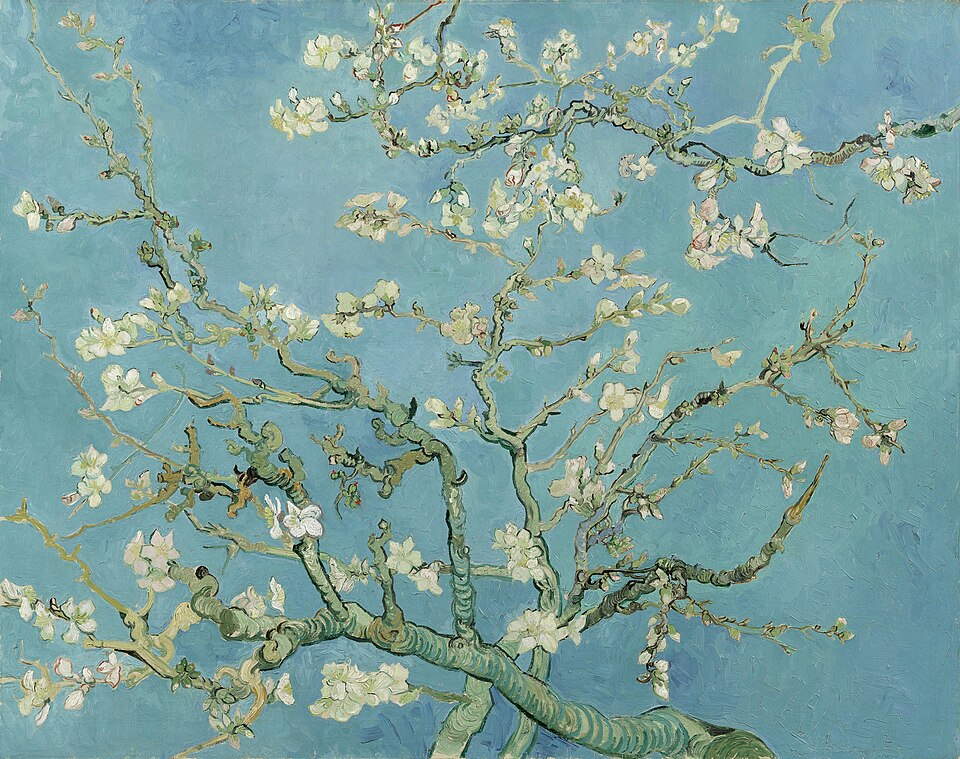
| Landscape Painter | Natural scenery, weather, atmosphere | Canvas, paper | Constable, Turner, Corot, Pissarro |
| Still Life Painter | Objects — food, flowers, vessels, fabric | Canvas, panel | Jan Davidsz. de Heem, Chardin, Cézanne |
| Genre Painter | Everyday life scenes, ordinary people | Canvas | Vermeer, Jan Steen, Pieter de Hooch |
| Fresco / Mural Painter | Architectural surfaces, public walls | Plaster, walls | Michelangelo, Giotto, Diego Rivera |
| Miniature Painter | Small-scale portraits, manuscript illustration | Vellum, ivory, copper | Nicholas Hilliard, Hans Holbein (miniatures), Jean Clouet |
| Icon Painter | Religious figures, sacred images | Wood panel, gold ground | Andrei Rublev, Theophanes the Greek |
| Abstract Painter | Form, color, and line as subjects themselves | Canvas, paper | Kandinsky, Rothko, Mondrian, Pollock |
| Plein Air Painter | Outdoor scenes painted on location | Canvas, board, paper | Monet, Constable, Corot, Winslow Homer |
The Hierarchy That Defined Everything
Before getting into individual types, one historical fact organizes all of them: in 1669, the French Royal Academy of Art established a formal ranking of painting categories from most to least prestigious. From top to bottom: History Painting, Portraiture, Genre Painting, Landscapes, and Still Life. This hierarchy governed what painters could exhibit, what they could charge, and how seriously critics took their work. It held enormous power over European art for two centuries and explains why so many ambitious painters tried to work at the top of the list even when their natural gifts lay elsewhere.
History Painters
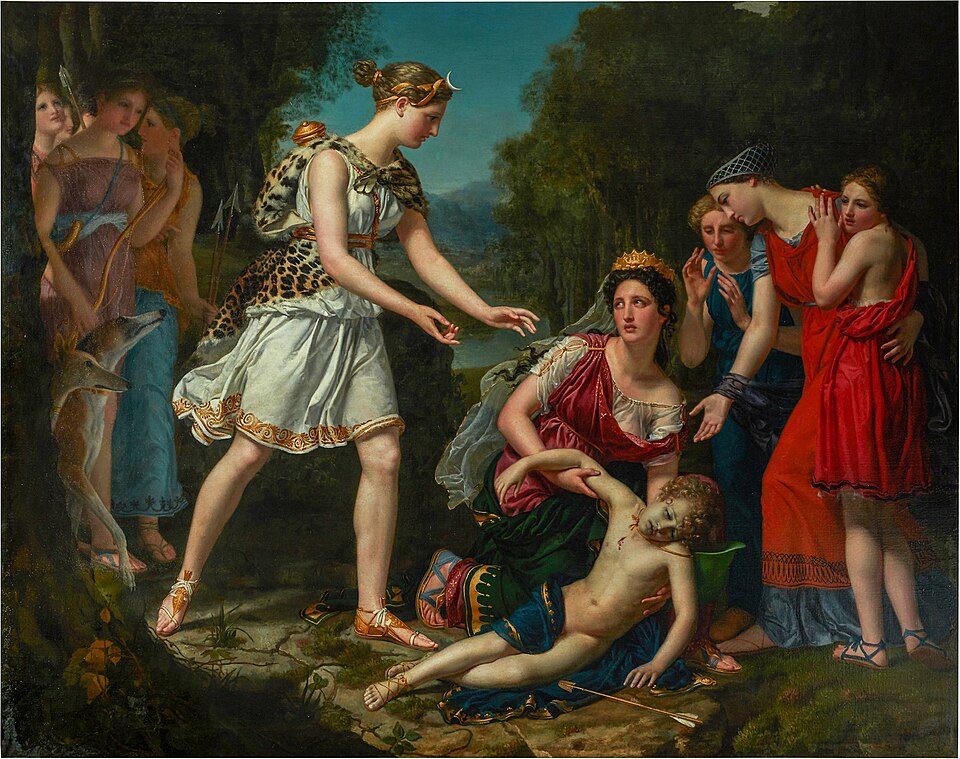
History painting was the most prestigious category in academic art and the most demanding. It covered not just historical events but biblical narratives, classical mythology, heroic legend, and allegory — anything requiring the painter to compose multiple figures in a dramatic scene and convey moral or narrative weight. Jacques-Louis David’s Death of Socrates (1787) and Théodore Géricault’s Raft of the Medusa (1818–19) are archetypal examples: grand canvases that demand that the viewer feel the gravity of an event. History painters needed mastery of the human figure, compositional arrangement, anatomy, perspective, and expression simultaneously. It was the test that the academies considered the highest measure of a painter’s skill.
Portrait Painters
Portrait painting has existed in some form since ancient Egypt — the earliest surviving individual portraits are idealized faces painted on the fronts of dynastic sarcophagi — but it became a full professional specialty in Renaissance Europe. A portrait painter’s job was to capture a likeness while also conveying status, character, and often the specific wishes of a paying patron.
Rembrandt was the greatest psychological portraitist in Western art, producing around 80 self-portraits across his life that constitute the most sustained autobiographical painting project in history. Velázquez worked with economic, extraordinarily informative brushstrokes that photographers later studied and borrowed. Hans Holbein the Younger painted the English court of Henry VIII with a precision that functions almost as historical documentation. John Singer Sargent in the late 19th and early 20th centuries turned the commissioned portrait into a vehicle for virtuosic brushwork and social observation simultaneously.
Photography changed the portrait painter’s role dramatically from the mid-19th century onward — the camera took over the documentary function, leaving portrait painters to compete on interpretation and expression rather than pure likeness.
Landscape Painters
Landscape painting was ranked near the bottom of the academic hierarchy, but practicing landscape painters ignored the ranking and built the most popular tradition in Western art. Landscape painting as a fully independent genre developed in the Netherlands in the early 17th century, where a prosperous merchant class bought paintings of their own flat, cloud-heavy country. The English landscape tradition — Constable, Turner — elevated the genre dramatically in the early 19th century. J.M.W. Turner elevated landscape painting through expressive color and atmospheric effects that pushed toward abstraction a century before abstraction existed as a movement.
The Impressionists were largely landscape painters working outdoors — plein air — and their insistence on painting directly from nature rather than composing from studio sketches transformed what landscape meant. Camille Pissarro, Alfred Sisley, and Claude Monet all worked primarily in landscape and produced bodies of work that built the entire visual grammar of Impressionism.
Still Life Painters
Still life — the painting of objects rather than people or places — was ranked last in the academic hierarchy and produced some of the most technically extraordinary work in the history of painting. Dutch and Flemish painters of the 17th century elevated the still life into a specialized professional practice. Jan Davidsz. de Heem’s floral arrangements and banquet pieces are constructed with a precision and luminosity that takes years of practice to even approach. Jean-Baptiste-Siméon Chardin in 18th-century France made still life intimate and serious — his kitchen objects carry the same quiet dignity that Vermeer gave to domestic interiors.
Paul Cézanne upended the tradition entirely by using fruit and pottery not as ends in themselves but as problems in geometry and structure — his still lifes fed directly into Cubism.
Genre Painters
Genre painting depicts ordinary people in everyday situations — taverns, kitchens, market scenes, domestic interiors. Vermeer is the supreme example: quiet scenes of women reading letters, pouring milk, playing music, bathed in window light. Jan Steen painted more chaotic domestic scenes with evident moral commentary. Pieter de Hooch constructed courtyards and tiled interiors with a serene attention to architectural space. The Dutch Golden Age was the apex of genre painting, driven by a market of middle-class collectors who wanted images of their own world rather than biblical events or classical mythology.
Fresco and Mural Painters
Fresco painters work on plaster walls, applying pigment while the plaster is still wet so that the paint bonds into the wall itself as it dries. It is one of the most demanding and least forgiving techniques in painting — corrections are almost impossible and the whole surface of a day’s work must be completed before it sets. Michelangelo spent four years on his back on scaffolding painting the Sistine Chapel ceiling in fresco, and he described it as the worst experience of his life. Giotto in 13th and 14th-century Italy used fresco to transform the entire tradition of Western figure painting, introducing spatial depth and human emotion into images that had previously been flat and symbolic.
Diego Rivera in 20th-century Mexico used large-scale fresco to make political art that was accessible to people who would never enter a gallery. His Detroit Industry Murals and the History of Mexico at the National Palace are among the most ambitious mural projects since the Renaissance.
Miniature Painters
Miniature painters worked at the opposite end of the scale. The name comes from minium, the red lead pigment used by medieval manuscript illuminators — it has nothing to do with size, though the work is invariably small. The tradition developed from illuminated manuscripts into freestanding portrait miniatures worn in lockets or kept in jeweled boxes. Nicholas Hilliard served as miniature painter to Queen Elizabeth I for over 30 years. Jean Clouet at the French court is credited with liberating the portrait miniature from the manuscript context and making it a standalone object.
Miniature painters worked in watercolor and bodycolor on vellum, then later on ivory and copper. The level of detail required — a face rendered in a space two inches across — demanded a completely different set of physical skills from large-scale painting.
Icon Painters
Icon painters operated within the strictest constraints of any category on this list. Byzantine icon painting was not considered an act of individual artistic expression — it was considered a sacred practice, with theological guidelines governing composition, palette, and figure types. Icons were understood as sacred objects channeling divine presence, not personal artistic statements. The gold ground that fills Byzantine icons was not decorative; it represented the light of heaven.
Andrei Rublev, the 15th-century Russian icon painter, is considered the greatest master of the tradition — his Trinity icon remains the standard by which Byzantine painting is measured.
Abstract Painters
Abstract painters dispense with recognizable subject matter entirely. The first fully abstract works are generally attributed to Wassily Kandinsky around 1910, though the development was gradual. Piet Mondrian reduced painting to grids of primary color. Mark Rothko reduced it to rectangles of luminous color designed to produce a meditative, almost physical response. Jackson Pollock eliminated the brush from large portions of his process and poured, dripped, and flung paint directly onto canvases laid on the floor, making the act of painting itself visible in the finished work.
Abstract painters are defined not by what they depict — nothing — but by the specific visual and emotional language they develop, which becomes as distinctive as a signature.
The Painters Who Refused Categories
Most major painters resist clean categorization. Rembrandt painted portraits, history paintings, landscapes, and genre scenes. Cézanne painted portraits, landscapes, and still lifes and is claimed as a forefather by both Impressionism and Cubism. Frida Kahlo painted self-portraits that function simultaneously as autobiography, surrealist imagery, and cultural statement. The categories are tools for organizing the history — they are not cages that contain it.