Western art history spans more than five thousand years — from the cave paintings of prehistoric Europe to the digital installations of the twenty-first century. It is a story of human creativity shaped by religion, politics, philosophy, technology, and trade. Each era built upon, and often rebelled against, what came before, creating a living chain of visual ideas that continues to evolve. This survey organises Western art into its major historical periods, examining defining characteristics, key artists, landmark works, and the cultural forces that shaped each age.
Overview: Major Periods of Western Art
| Period | Approx. Dates | Region of Origin | Core Theme |
|---|---|---|---|
| Prehistoric & Ancient | 30,000 BCE – 400 CE | Europe / Mediterranean | Ritual, religion, imperial power |
| Medieval | 400 – 1400 CE | Europe | Christian faith & salvation |
| Renaissance | 1400 – 1600 | Italy, then Northern Europe | Humanism & classical revival |
| Baroque & Rococo | 1600 – 1780 | Europe-wide | Drama, emotion, grandeur |
| Neoclassicism & Romanticism | 1750 – 1850 | France, Britain, Germany | Reason versus feeling |
| Realism & Impressionism | 1850 – 1900 | France | Modern life & perception |
| Early Modernism | 1900 – 1945 | Europe & USA | Abstraction & experimentation |
| Post-War & Contemporary | 1945 – present | Global | Concept, identity, plurality |
30,000 BCE – 400 CE
1. Prehistoric and Ancient Art
The earliest known Western art consists of cave paintings, carved figurines, and megalithic architecture. Sites such as Lascaux in France (c. 17,000 BCE) and Altamira in Spain reveal sophisticated representations of animals executed with an understanding of form and movement that still astonishes modern viewers. These works were likely connected to ritual or shamanistic practice rather than purely aesthetic intention.
The civilisations of ancient Egypt, Greece, and Rome each contributed foundational visual languages. Greek art progressed through Archaic rigidity to Classical idealism and Hellenistic dynamism, developing the contrapposto stance, the canon of human proportion, and architectural orders — Doric, Ionic, Corinthian — that architects still employ today. Roman art absorbed Greek models and applied them to imperial propaganda, portrait sculpture, and monumental public building.
| Culture | Key Art Forms | Representative Work | Lasting Legacy |
|---|---|---|---|
| Prehistoric Europe | Cave painting, figurines | Lascaux cave paintings (~17,000 BCE) | Earliest narrative image-making |
| Ancient Egypt | Tomb painting, relief sculpture | Bust of Nefertiti (~1345 BCE) | Hierarchical scale, frontality |
| Ancient Greece | Sculpture, pottery, architecture | Parthenon sculptures (~440 BCE) | Idealism, proportion, contrapposto |
| Ancient Rome | Portrait sculpture, mosaic, architecture | Colosseum (70–80 CE) | Realism, engineering, public art |
400 – 1400 CE
2. Medieval Art
After the fall of Rome, the Christian Church became the primary patron of art across Europe. Medieval art was fundamentally theological: its purpose was to instruct the illiterate faithful in scripture and to direct devotion toward the divine. Beauty was understood as a reflection of God’s glory rather than worldly reality.
Byzantine art, centred in Constantinople, produced luminous gold-ground mosaics and flat, hieratic figures that emphasised the spiritual over the physical. In Western Europe, the Romanesque style featured heavy stone architecture and stylised sculpture; the subsequent Gothic period introduced soaring cathedrals, pointed arches, ribbed vaults, and stained-glass windows that flooded interiors with coloured light. Illuminated manuscripts produced in monastic scriptoria represent another pinnacle of medieval craftsmanship.
| Style | Dates | Key Features | Key Examples |
|---|---|---|---|
| Early Christian / Byzantine | 300 – 1453 CE | Gold grounds, flat figures, mosaics | Hagia Sophia; Ravenna mosaics |
| Carolingian & Ottonian | 750 – 1000 CE | Manuscript illumination, ivory carving | Lindisfarne Gospels |
| Romanesque | 1000 – 1200 CE | Round arches, thick walls, tympanum sculpture | Vézelay Abbey tympanum |
| Gothic | 1140 – 1400 CE | Pointed arch, flying buttress, stained glass | Notre-Dame de Paris; Chartres Cathedral |
c. 1400 – 1600
3. The Renaissance
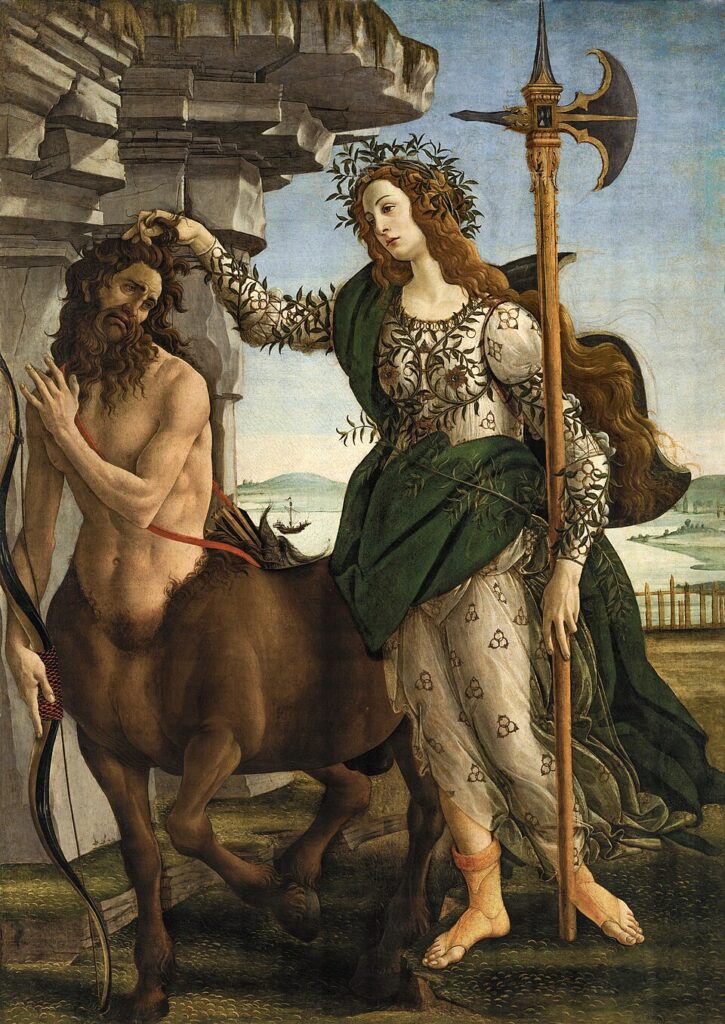
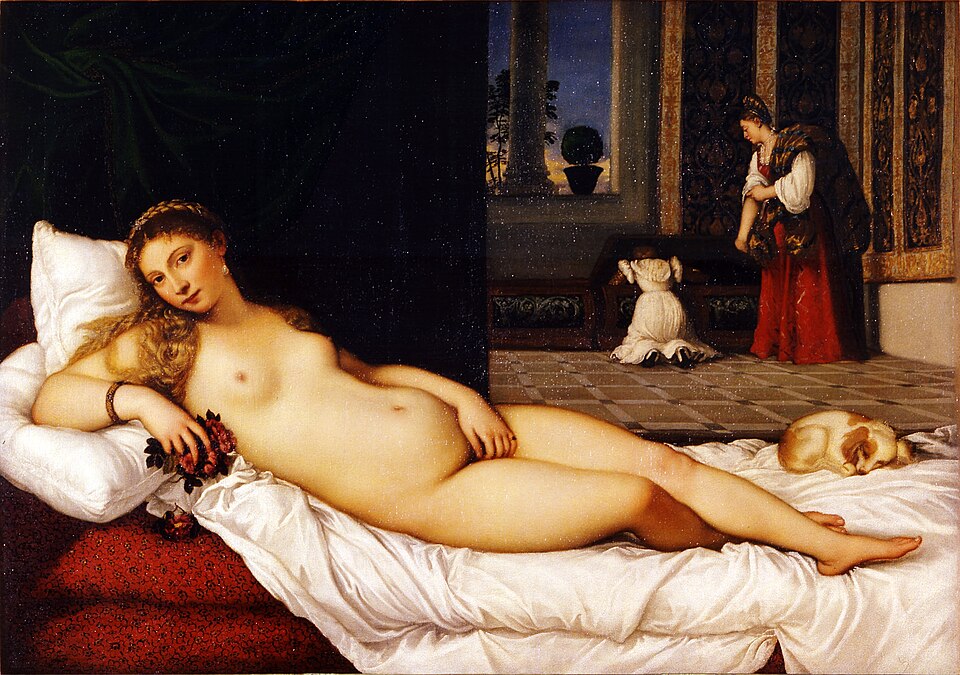
The Renaissance — meaning “rebirth” — originated in the Italian city-states, particularly Florence, where wealthy banking families such as the Medici patronised artists and scholars. The movement revived classical Greco-Roman learning and redirected art toward the study of nature and the human figure. Linear perspective, codified by Brunelleschi and explained by Alberti, gave painters a mathematical tool to create convincing illusionistic space.
The High Renaissance (c. 1490–1527) produced works of unprecedented ambition: Leonardo da Vinci’s investigations of anatomy and nature; Michelangelo’s heroic Sistine Chapel ceiling; Raphael’s serene compositions of extraordinary grace. The movement spread north, where Flemish painters such as Jan van Eyck pioneered oil painting and devoted attention to domestic objects, textiles, and light with extraordinary precision.
Key Renaissance Artists
| Artist | Nationality | Key Works | Innovation |
|---|---|---|---|
| Leonardo da Vinci | Italian | The Last Supper; Mona Lisa | Sfumato, scientific observation |
| Michelangelo | Italian | Sistine Chapel ceiling; David | Heroic anatomy, terribilità |
| Raphael | Italian | School of Athens; Sistine Madonna | Grace, compositional harmony |
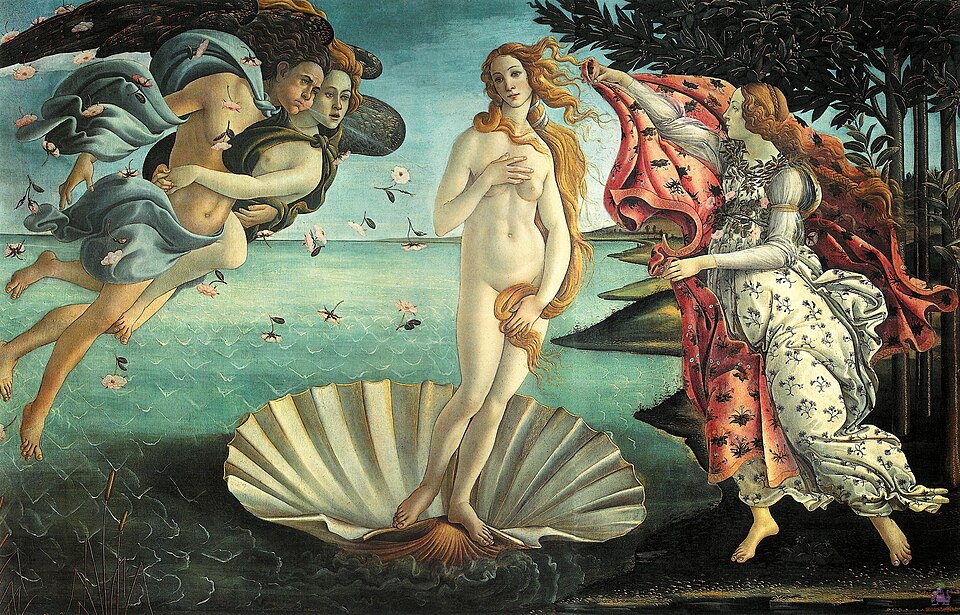
| Sandro Botticelli | Italian | The Birth of Venus; Primavera | Mythological allegory, lyrical line |
| Jan van Eyck | Flemish | Ghent Altarpiece; Arnolfini Portrait | Oil painting, microscopic detail |
| Albrecht Dürer | German | Self-Portrait (1500); Four Apostles | Printmaking, Northern naturalism |
c. 1600 – 1780
4. Baroque and Rococo
The Baroque emerged in Rome around 1600, partly as a response to the Protestant Reformation. The Catholic Church commissioned dramatic, emotionally charged art to reassert its spiritual authority. Baroque painting is characterised by powerful contrasts of light and shadow (chiaroscuro and, in its most extreme form, tenebrism), dynamic diagonal compositions, and a strong sense of movement frozen at a moment of peak action.
Caravaggio introduced a jarring naturalism that placed sacred figures in working-class settings. Peter Paul Rubens brought sweeping energy and fleshy abundance. In the Dutch Republic, Rembrandt van Rijn achieved unparalleled psychological depth in portraiture. Gian Lorenzo Bernini transformed Rome with theatrical sculpture and architecture. By the early eighteenth century the Baroque softened into the Rococo: lighter, more playful, pastel-hued, and associated with French aristocratic interiors.
Baroque vs. Rococo at a Glance
| Feature | Baroque | Rococo |
|---|---|---|
| Mood | Dramatic, intense, weighty | Playful, light, decorative |
| Colour Palette | Deep, high contrast | Pastel, soft, pearlescent |
| Subject Matter | Religion, mythology, portraiture | Fêtes galantes, love scenes, ornament |
| Architecture | Grandeur, curved forms, theatricality | Asymmetry, shell motifs, gilding |
| Key Artists | Caravaggio, Rubens, Rembrandt, Bernini | Watteau, Boucher, Fragonard, Tiepolo |
| Key Region | Italy, Flanders, Netherlands, Spain | France, Central Europe |
c. 1750 – 1850
5. Neoclassicism and Romanticism
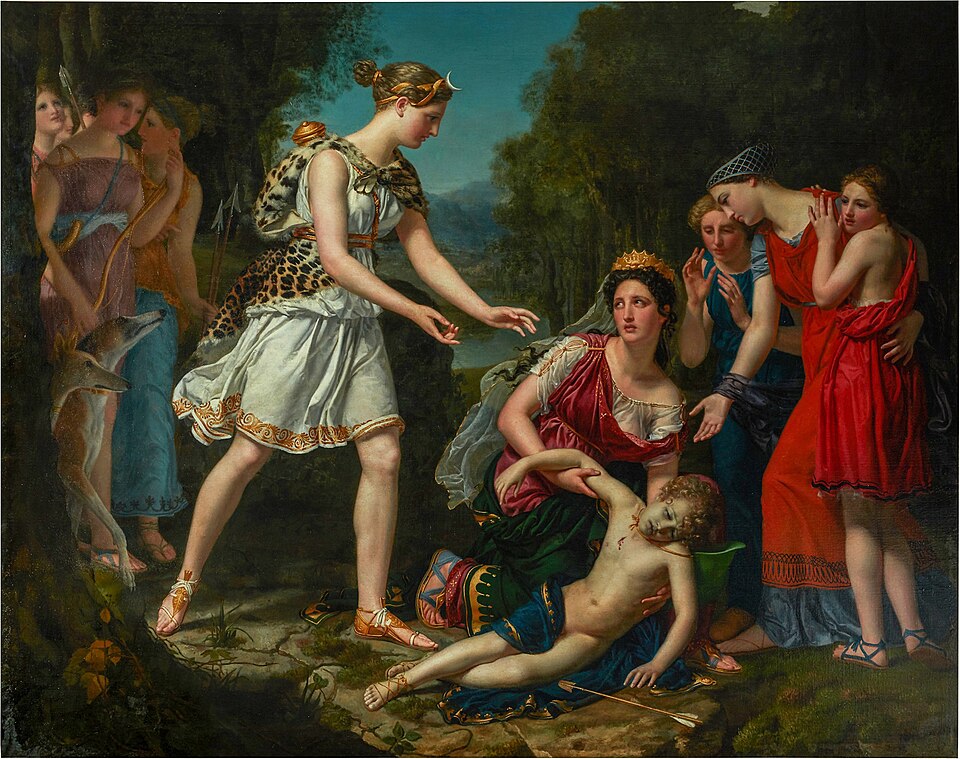
The late eighteenth century saw two contrasting responses to the Baroque and Rococo. Neoclassicism, inspired by the excavations of Pompeii and Herculaneum and by the writings of Johann Joachim Winckelmann, looked back to ancient Greece and Rome for models of moral seriousness, clear outline, and restrained emotion. Jacques-Louis David became its foremost practitioner, painting heroic histories that served first the revolutionary and then the Napoleonic agenda.
Romanticism offered the opposite impulse: a celebration of powerful emotion, nature’s sublimity, individual genius, and the exotic or supernatural. Eugène Delacroix brought saturated colour and tumultuous energy; Caspar David Friedrich painted lonely figures before vast, mist-wrapped landscapes; J.M.W. Turner dissolved form in light and atmosphere.
| Movement | Values | Style | Leading Figures |
|---|---|---|---|
| Neoclassicism | Reason, civic virtue, antiquity | Clear line, cool colour, planar composition | David, Ingres, Canova, Thorvaldsen |
| Romanticism | Emotion, nature, individuality, the sublime | Loose brushwork, dramatic colour, atmospheric light | Delacroix, Friedrich, Turner, Géricault, Goya |
c. 1850 – 1900
6. Realism and Impressionism
As industrialisation transformed European society, artists turned to the observable world of everyday life — peasants, labourers, cafés, racetracks, and river banks — rejecting both the heroic subjects of Neoclassicism and the exotic escapism of Romanticism. Gustave Courbet declared that he could paint only what he could see, inaugurating Realism as both a style and a political stance.
Impressionism pushed further, capturing the transient effects of light and atmosphere through loose, visible brushstrokes and unblended colour. Claude Monet painted the same haystack or cathedral façade at different times of day to record shifting light. Pierre-Auguste Renoir celebrated leisure and pleasure. Edgar Degas explored movement and unusual viewpoints. The Impressionists were initially ridiculed by the establishment but within two decades had transformed the idea of what a painting could be.
| Artist | Movement | Style Hallmarks | Notable Works |
|---|---|---|---|
| Gustave Courbet | Realism | Unidealized subjects, heavy impasto | The Stone Breakers; A Burial at Ornans |
| Édouard Manet | Proto-Impressionism | Flat colour, modern life, bold outlines | Olympia; Le Déjeuner sur l’herbe |
| Claude Monet | Impressionism | Broken colour, series paintings, light | Water Lilies; Haystacks series |
| Pierre-Auguste Renoir | Impressionism | Warm colour, leisure scenes, dappled light | Luncheon of the Boating Party |
| Edgar Degas | Impressionism | Unusual angles, movement, pastel | The Dance Class; L’Absinthe |
| Georges Seurat | Post-Impressionism | Systematic dots of pure colour (Pointillism) | A Sunday on La Grande Jatte |
c. 1900 – 1945
7. Early Modernism
The first half of the twentieth century witnessed an explosion of competing avant-garde movements, each rejecting tradition in a different way. Fauvism assaulted viewers with non-naturalistic colour; Cubism fractured form and perspective; Expressionism distorted reality to convey emotional states; Futurism celebrated speed and machines; Dada attacked the very idea of art in response to the horrors of World War I; Surrealism explored the unconscious and the dreamlike.
Pablo Picasso and Georges Braque developed Cubism between 1907 and 1914, producing what many consider the most radical break in Western pictorial tradition since the Renaissance. Abstract art — pioneered by Wassily Kandinsky, Piet Mondrian, and Kazimir Malevich — pushed further, abandoning representational content altogether. The Bauhaus school in Germany sought to unite fine art, craft, and industrial design.
Major Avant-Garde Movements
| Movement | Dates | Key Ideas | Key Figures |
|---|---|---|---|
| Fauvism | 1905 – 1910 | Pure colour as expression, not description | Matisse, Derain, Vlaminck |
| Expressionism | 1905 – 1933 | Distortion to convey inner emotion | Kirchner, Munch, Nolde, Schiele |
| Cubism | 1907 – 1921 | Multiple viewpoints simultaneously | Picasso, Braque, Léger |
| Futurism | 1909 – 1944 | Speed, technology, glorification of violence | Boccioni, Severini, Marinetti |
| Dada | 1916 – 1924 | Anti-art, absurdism, found objects | Duchamp, Arp, Tzara, Höch |
| Surrealism | 1924 – 1945 | Unconscious mind, dreams, the irrational | Dalí, Ernst, Magritte, Kahlo |
| Constructivism | 1915 – 1934 | Art serving socialist society; geometric abstraction | Rodchenko, Tatlin, El Lissitzky |
| De Stijl / Neoplasticism | 1917 – 1931 | Primary colours, horizontal & vertical lines only | Mondrian, van Doesburg |
| Bauhaus | 1919 – 1933 | Integration of art, craft, and design | Gropius, Klee, Kandinsky, Itten |
1945 – Present
8. Post-War and Contemporary Art
The devastation of World War II profoundly disrupted European cultural confidence. New York emerged as the world capital of avant-garde art with Abstract Expressionism: large-scale, gestural canvases by Jackson Pollock, Willem de Kooning, and Mark Rothko that sought an immediate, emotionally raw encounter between artist, canvas, and viewer. Pop Art followed in the 1950s and 1960s, embracing consumer culture and mass media imagery through the cool, ironic work of Andy Warhol and Roy Lichtenstein.
Minimalism reduced art to basic geometric forms and industrial materials. Conceptualism argued that the idea behind a work was itself the artwork. Since the 1980s, post-modernism, identity politics, digital technology, and globalisation have multiplied the directions art can take simultaneously. There is no single dominant movement in contemporary art — only a rich, contested plurality of approaches, media, and voices.
| Movement | Approx. Dates | Core Approach | Representative Artists |
|---|---|---|---|
| Abstract Expressionism | 1945 – 1965 | Gestural, emotional, large-scale abstraction | Pollock, de Kooning, Rothko, Kline |
| Pop Art | 1955 – 1970 | Consumer imagery, mass media, irony | Warhol, Lichtenstein, Hockney, Hamilton |
| Minimalism | 1960 – 1975 | Geometric simplicity, industrial materials | Judd, Serra, LeWitt, Flavin |
| Conceptual Art | 1966 – present | Idea over object; language as art | Kosuth, On Kawara, Lawrence Weiner |
| Feminist Art | 1970 – present | Gender politics, body, domestic life | Chicago, Hesse, Sherman, Kruger |
| Neo-Expressionism | 1980 – 1990 | Return to painting, raw emotion | Basquiat, Kiefer, Schnabel |
| Street / Graffiti Art | 1980 – present | Public space, urban identity | Basquiat, Banksy, Shepard Fairey |
| Digital & New Media Art | 1990 – present | Technology, interactivity, virtuality | Nam June Paik, Hito Steyerl, TeamLab |
9. Cross-Period Themes and Continuities
Across five thousand years of Western art, several recurring concerns connect disparate eras and movements:
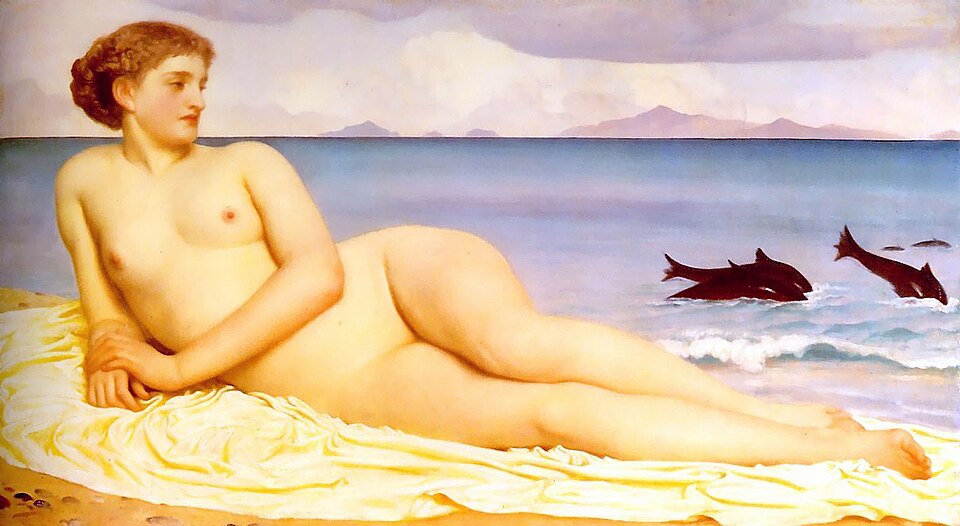
- The Human Body: From Greek sculpture to Renaissance nudes to Lucian Freud’s unflinching portraits, the body has served as the primary vehicle for exploring beauty, power, vulnerability, and identity.
- Religion and Belief: Christianity dominated Western patronage for over a millennium; spiritual themes did not disappear in the modern era but became more personal, symbolic, or critical.
- Nature and Landscape: Whether as background, subject, or metaphor, the natural world — from Dutch seventeenth-century landscapes to Turner’s storms to Land Art — has consistently engaged Western artists.
- Power and Politics: Art has served and subverted authority in equal measure, from imperial Roman triumphal arches to Goya’s war paintings to contemporary activist art.
- Technology and Medium: Each era’s dominant technology — fresco, oil paint, printmaking, photography, film, digital media — has transformed what art can be and who can make it.
| Theme | Ancient / Medieval Expression | Modern / Contemporary Expression |
|---|---|---|
| The Human Figure | Greek sculpture, Roman portraiture | Cézanne’s bathers; Freud’s nudes; Kiki Smith |
| Religion & Spirituality | Cathedral sculpture; altarpieces | Rothko Chapel; Kiefer’s theology; Doris Salcedo |
| War & Violence | Roman triumphal reliefs | Goya’s Disasters; Picasso’s Guernica |
| Nature | Hellenistic landscape painting | Constable; Monet; Robert Smithson’s earthworks |
| Identity & Power | Imperial portraiture | Cindy Sherman; Kehinde Wiley; Zanele Muholi |
10. Conclusion
Western art history is not a tidy progression from primitive to sophisticated, but a complex, contested conversation across time. Movements arise in dialogue with — and often in revolt against — their predecessors. What counts as art, who makes it, for whom, and under what conditions of patronage or protest has changed enormously and continues to change.
Yet the works endure: the Parthenon frieze, Michelangelo’s Sistine ceiling, Vermeer’s domestic interiors, Picasso’s Guernica, Pollock’s drip paintings. They endure not merely as historical documents but as living experiences that reward the attention of any viewer willing to engage with them. The study of art history is ultimately an invitation to see the world more richly — through the eyes of countless artists across millennia who struggled, with extraordinary skill and passion, to give visible form to human experience.
Century-by-Century Summary
| Century | Dominant Style(s) | Cultural Context | Technological Shift |
|---|---|---|---|
| 5th BCE | Classical Greek | Democracy; Periclean Athens | Marble sculpture at scale |
| 1st – 4th CE | Roman Imperial; Early Christian | Empire; rise of Christianity | Concrete architecture |
| 12th – 13th | Gothic | Scholasticism; Crusades | Ribbed vault; stained glass |
| 15th | Early Renaissance | Humanism; Medici patronage | Linear perspective; oil paint |
| 17th | Baroque | Counter-Reformation; nation states | Large-scale canvas; printing press |
| 19th | Realism; Impressionism | Industrialisation; urbanisation | Photography; railways |
| 20th (first half) | Modernist abstraction | World wars; revolutions | Film; radio; mass media |
| 20th – 21st | Conceptualism; Digital art | Globalisation; internet | Computer; digital imaging |
Art History & Philosophy Intertwined
How Western thought has shaped — and been shaped by — its visual culture
Art and philosophy have never been separate disciplines neatly housed in different rooms. They have always shared a single restless question: what is it to be human in this world? Painters, sculptors, and architects have given visible form to metaphysical ideas long before those ideas were set down in prose; philosophers, in turn, have drawn on the evidence of artworks to test their theories of beauty, truth, knowledge, and morality.
This survey traces that deep entanglement across Western history — not as a list of art movements and a parallel list of thinkers, but as a single braided conversation in which the image and the argument illuminate each other at every turn. The result is a story about how human beings have tried, through both eye and mind, to make sense of existence.c. 600 BCE – 400 CE
1. The Ancient World: Mimesis, Beauty, and the Good
The first sustained Western debate about art is also one of the most contentious in the entire philosophical tradition. Plato, writing in the fourth century BCE, argued that art is a form of deception. Reality, for Plato, consists of eternal, perfect Forms — the ideal circle, the ideal horse, the ideal justice. Physical objects in the world are already imperfect copies of those Forms; a painting of a horse is a copy of a copy, twice removed from truth. Art, on this account, corrupts the soul by inflaming the passions and flattering our appetite for illusion.
The poet or painter … is an imitator … and is third in the descent from the king and from truth.— Plato, Republic, Book X
Yet the very artworks of classical Greece seem to argue back. The Parthenon sculptures (c. 440 BCE), the Doryphoros of Polykleitos, the theatrical masks of Athenian tragedy — these are not passive imitations of the visible world but active explorations of ideal proportion, balance, and harmony. The sculptor Polykleitos wrote a treatise, the Canon, laying out the exact mathematical ratios that produce a perfect human body. Here, artistic practice anticipated Platonic idealism: the sculptor was carving the Form, not just copying a model.
Aristotle, Plato’s most brilliant student and most effective critic, defended art in his Poetics. Mimesis (imitation) is, he argued, a fundamental human instinct and a source of genuine knowledge. Tragedy, by depicting suffering and misfortune, produces katharsis — a purging or clarification of the emotions — that leaves the audience wiser about the human condition. Art does not seduce us away from truth; it is one of the paths toward it. The Roman art that followed drew heavily on Greek models but added its own philosophical concerns: Stoic emphasis on duty, public virtue, and the transience of worldly achievement found expression in portrait sculpture so psychologically individuated it seems to demand an inner life of its viewer.
| Thinker | Core Claim About Art | Art Movement / Form | Key Concept |
|---|---|---|---|
| Plato | Art is imitation of imitation; dangerous illusion | Classical Greek sculpture & painting | Mimesis (negative) |
| Aristotle | Imitation yields knowledge; tragedy purges emotion | Athenian tragedy; narrative reliefs | Katharsis; mimesis (positive) |
| Polykleitos | Beauty = mathematical proportion | Canon sculpture; Doryphoros | Symmetria (right proportion) |
| Plotinus | Art reveals the divine One through visible beauty | Late Roman; early Christian | Emanation; the sublime |
400 – 1400 CE
2. The Medieval Period: Image, Symbol, and the Invisible God
The Christian Middle Ages inherited both Platonic suspicion of images and Neoplatonic reverence for them — a contradiction that generated one of the most productive and violent debates in Western cultural history. The Iconoclast controversy of the eighth and ninth centuries asked, with deadly seriousness, whether depicting Christ in paint or mosaic was an act of piety or an act of blasphemy. To show God in a human face risked either idolatry (worshipping a made thing) or heresy (denying Christ’s divine nature by implying he could be fully captured in matter).
The defence of images offered by John of Damascus and later ratified by the Second Council of Nicaea (787 CE) drew on a philosophical distinction between the image and its prototype: when we venerate an icon of Christ, we venerate Christ himself, not the painted wood. The icon is a window onto the divine, not a substitute for it. This theology directly shaped Byzantine visual style: the flat, gold-ground figures with elongated proportions and downcast eyes are not failed attempts at naturalism but deliberate choices encoding the idea that we are looking at a transcendent reality beyond the merely visible.
Thomas Aquinas, synthesising Aristotle with Christian theology in the thirteenth century, offered the most influential medieval theory of beauty: integritas (wholeness), consonantia (harmony), and claritas (radiance or splendour). These criteria map directly onto Gothic cathedral architecture — the unified programme of sculpture, glass, and stone that makes Chartres or Reims not merely beautiful buildings but philosophical arguments rendered in light.
The Philosophical Problem
Can the infinite, invisible God be represented in finite, visible matter without reducing or falsifying the divine?
The Artistic Solution
Abstraction, gold grounds, and symbolic scale deliberately signal that the image points beyond itself — a visual theology of transcendence.c. 1400 – 1600
3. The Renaissance: Humanism, Proportion, and the Dignity of Man
The Renaissance did not simply revive classical art; it revived classical philosophy and asked what that philosophy demanded of the image. Neoplatonism, especially as filtered through Marsilio Ficino and the Florentine Academy, held that physical beauty was a trace of divine beauty in matter — that to paint a beautiful human body was to make the soul’s aspirations visible. This gave Renaissance artists a philosophical mandate: the pursuit of beauty was not vanity but a form of theology.
Pico della Mirandola’s Oration on the Dignity of Man (1486) gave the era its most resonant philosophical statement: unlike other creatures, the human being has no fixed nature but can make of itself what it will — ascending toward the angels or descending toward the beasts. Michelangelo’s Sistine Chapel ceiling is the visual equivalent. Adam receives the divine spark not through an act of God alone but through an outstretched human hand; the painting insists that human beings are participants in their own creation.
Linear perspective, developed by Brunelleschi and theorised by Alberti, carried its own philosophical weight. To construct a rational, measurable pictorial space with a single vanishing point is to assert that the world is geometrically ordered, that the human eye stands at the centre of that order, and that reason can penetrate and organise visible reality. It is Humanism made into geometry.
| Philosophical Idea | Thinker | Visual Expression | Key Artwork |
|---|---|---|---|
| Neoplatonic beauty as divine trace | Ficino, Pico | Idealised figures; mythological allegory | Botticelli, Primavera (1482) |
| Dignity and autonomy of man | Pico della Mirandola | Heroic anatomy; self-portraiture | Michelangelo, Sistine ceiling (1512) |
| Rational order of the world | Alberti, Brunelleschi | Linear perspective; architectural harmony | Raphael, School of Athens (1511) |
| Nature as object of empirical study | Leonardo (practitioner-theorist) | Anatomical drawing; sfumato | Leonardo, Virgin of the Rocks (1483–86) |
c. 1680 – 1800
4. The Enlightenment: Reason, Taste, and the Birth of Aesthetics
The word “aesthetics” was coined in 1750 by the German philosopher Alexander Baumgarten, who argued that sensory knowledge — the experience of beauty — deserves the same rigorous philosophical treatment as logical or scientific knowledge. The discipline that followed transformed how Western culture thought about art, taste, and judgment.
David Hume asked whether beauty is in the object or in the perceiving subject. His answer was subtle: while taste varies between individuals, we can cultivate a “standard of taste” through wide experience, careful attention, and freedom from prejudice. The implication for art was significant — it justified both a canon of masterworks and the social institution of criticism as a practice of educated judgment.
Immanuel Kant’s Critique of the Power of Judgment (1790) went further and remains the most influential philosophical text about art ever written. Kant distinguished the merely “agreeable” (what gives me personal pleasure) from the genuinely “beautiful” (what I judge to be beautiful with a claim to universal agreement). A beautiful object, for Kant, produces “free play” between the imagination and the understanding — a state of pleasurable, purposive activity that feels necessary even though no concept can fully capture it. This is why arguing about art is not arbitrary: we are not merely reporting personal preferences but making claims we expect others to share.
Taste is the faculty of judging an object or a mode of representation by means of a delight or aversion apart from any interest.— Immanuel Kant, Critique of the Power of Judgment (1790)
Neoclassical painting — David’s Oath of the Horatii (1784), with its austere geometry and civic heroism — embodied Enlightenment values directly: reason over passion, public duty over private feeling, the clarity of line over the seductions of colour. The painting is itself an argument about how human beings should live.c. 1780 – 1850
5. Romanticism: The Sublime, Feeling, and the Limits of Reason
If the Enlightenment trusted reason, Romanticism dramatised what reason cannot contain. Edmund Burke, in his Philosophical Enquiry into the Origin of Our Ideas of the Sublime and Beautiful (1757), distinguished beauty (pleasing, small, smooth, gentle) from the sublime (vast, obscure, powerful, threatening). The sublime produces not pleasure but a complex mixture of terror and exaltation — the feeling of standing before something that overwhelms the human scale.
Caspar David Friedrich’s paintings are philosophical meditations on precisely this experience. The lone figure with their back to us, gazing into a fog-wrapped mountain range or an ice-bound sea, is not merely a picturesque device but a visual argument: human consciousness, Romantic philosophy insists, is defined by its encounter with what exceeds it. Friedrich’s figures are us — small, finite, confronting the infinite.
Hegel, lecturing on aesthetics in Berlin in the 1820s, offered the most ambitious philosophical history of art ever attempted. Art, he argued, passes through three stages: Symbolic (ancient Eastern art, where the idea has not yet found adequate sensory form); Classical (Greek art, where idea and form achieve perfect equilibrium in the human body); and Romantic (Christian and modern art, where the inner spiritual life exceeds what any external form can capture). For Hegel, this progression ends in the “death of art” — not that art stops being made, but that philosophy supersedes it as the highest vehicle of human self-understanding.
| Philosopher | Key Concept | Romantic Artist | How the Concept Appears |
|---|---|---|---|
| Burke | The Sublime | Turner | Storms dissolving ships and coastlines in overwhelming light |
| Schopenhauer | Will; music as purest art | Wagner (opera) | Total artwork (Gesamtkunstwerk) drowning the individual will |
| Hegel | Art as spirit made visible; “death of art” | Friedrich | Figures dwarfed by landscapes — spirit straining beyond form |
| Schiller | Play drive; aesthetic education | Goethe | Art as moral formation; beauty reconciling sense and reason |
c. 1860 – 1945
6. Modernism: Form, Perception, and the Collapse of Certainty
The upheavals of modernism in art coincided with, and were partly caused by, a crisis in Western philosophy’s confidence in its own foundations. Nietzsche declared that “God is dead” — meaning not merely that religious belief had declined but that the entire framework of objective meaning, truth, and value that Christianity had underwritten was crumbling. Art could no longer illustrate a shared moral universe; it had to create its own.
The Impressionists’ turn to pure perception — painting not things but the light that falls on things at a particular moment — resonates with the phenomenological philosophy that would be articulated by Edmund Husserl and Maurice Merleau-Ponty. Consciousness, these philosophers argued, does not receive a ready-made world; it constitutes its experience actively, through embodied attention. Cézanne, who painted the same Mont Sainte-Victoire over and over, was exploring precisely this: how does the mind construct a stable world from constantly shifting perceptual data?
Cubism pushed the phenomenological insight to its logical extreme. If we never see an object from a single fixed viewpoint — if our knowledge of it is built from multiple perspectives over time — then why should a painting privilege one angle? Picasso and Braque’s fracturing of form is not arbitrary distortion but a philosophical claim about the nature of perception and knowledge.
Meanwhile, Kandinsky was arguing in Concerning the Spiritual in Art (1911) that abstraction could access a realm of inner necessity beyond the visible — that colour and line had direct psychological effects independent of representation. This is a Romantic insight in modernist dress: art reaching toward what exceeds visible reality.
| Philosophical Claim | Thinker | Artistic Response | Movement |
|---|---|---|---|
| No objective meaning; art must create its own values | Nietzsche | Rejection of academic subject matter | Symbolism; early abstraction |
| Consciousness constitutes experience through perception | Husserl; Merleau-Ponty | Recording light and sensation, not objects | Impressionism; Cézanne |
| Knowledge is perspectival, not singular | Nietzsche; James (Pragmatism) | Multiple viewpoints on one canvas | Cubism |
| Unconscious drives shape human life | Freud; Jung | Dream imagery; automatic writing | Surrealism; Dada |
| Art accesses spiritual inner necessity | Kandinsky (practitioner-theorist) | Pure abstraction; colour as emotion | Abstract Expressionism’s precursor |
1945 – 1975
7. Post-War Art: Existentialism, Language, and the Object
The catastrophe of World War II — and especially the Holocaust — forced a reckoning with the question Theodor Adorno put most starkly: can there be poetry after Auschwitz? The question was really about whether art could continue to perform its traditional function of humanising experience without aestheticising horror — turning the worst things human beings do to each other into beautiful, consoling objects.
Abstract Expressionism was partly a response to this crisis. Jackson Pollock’s drip paintings, Mark Rothko’s colour field canvases, Franz Kline’s slashing blacks — these refused to represent anything at all. They placed the viewer before the raw fact of paint, gesture, and scale, asking for an encounter that was physical and emotional before it was intellectual. The philosopher Harold Rosenberg coined the term “action painting” to describe work in which the canvas is “an arena in which to act” rather than a space to depict — a formulation deeply indebted to existentialist ideas about authentic being-in-the-world.
Existentialism — Sartre’s insistence that existence precedes essence, that human beings are condemned to define themselves through choice — found its visual correlate in art that refused predetermined form, that made its own making visible. Simone de Beauvoir’s feminist existentialism (“one is not born a woman, but becomes one”) would take decades to fully register in visual art, but it seeded the feminist art movement of the 1970s, which interrogated how images construct, enforce, and can subvert gender.
Existentialism in Paint
Pollock’s drip method embodies Sartrean freedom: no pre-given form, only the choices made in the act itself. The artist is the work’s creator and its first audience simultaneously.
Language & Concept
Wittgenstein’s late philosophy — meaning as use, language as a form of life — informed Conceptual Art’s proposition that a work of art can consist of a definition, a statement, or an instruction.1975 – Present
8. Contemporary Art: Deconstruction, Identity, and the Digital
Post-structuralist philosophy — Derrida’s deconstruction, Foucault’s genealogies of power, Baudrillard’s analysis of simulation — provided the theoretical vocabulary for much of the art made since 1975. Derrida argued that meaning is never fully present in a text but always deferred through chains of difference; images, similarly, never deliver a single, stable meaning but always carry contradictory traces of other images, histories, and power relations. Barbara Kruger’s text-and-image works — “Your body is a battleground,” “I shop therefore I am” — perform deconstruction directly: they hijack the visual rhetoric of advertising to reveal its ideological machinery.
Foucault’s analysis of how institutions (prisons, hospitals, schools, museums) exercise power through the organisation of space, visibility, and knowledge challenged artists and curators alike. The museum itself became a subject for critique: Hans Haacke’s institutional analyses, Fred Wilson’s “Mining the Museum” (1992) — in which he juxtaposed Maryland Historical Society’s collection with objects relating to the history of slavery — asked whose stories museums tell and whose they suppress.
Baudrillard’s concept of the simulacrum — the copy that has no original, the representation that no longer refers to reality — found its perfect illustration in Andy Warhol (retroactively) and in the entirely digital worlds of contemporary new media art. When Hito Steyerl or Ryan Trecartin constructs video works from the visual language of the internet, they are making Baudrillard’s analysis visible: in a world saturated with images, the image no longer represents reality; it is reality.
| Philosopher | Key Idea | Artistic Application | Artist / Work |
|---|---|---|---|
| Derrida | Deconstruction; différance | Exposing hidden assumptions in images | Barbara Kruger; Cindy Sherman |
| Foucault | Power/knowledge; institutional critique | Analysing museums and galleries as ideological spaces | Hans Haacke; Fred Wilson |
| Baudrillard | Simulacra; hyperreality | Art made from and about image saturation | Warhol; Hito Steyerl |
| Butler | Gender as performance | Photographing constructed identity | Cindy Sherman; Nan Goldin |
| bell hooks / Fanon | The gaze; colonial representation | Reclaiming Black and non-Western subjectivity | Kehinde Wiley; Zanele Muholi |
9. Core Concepts Across the Tradition
Certain philosophical concepts recur throughout Western art history, evolving in meaning but never disappearing entirely.
Mimesis
Plato → Aristotle → Modernism
Imitation of reality — condemned, defended, and ultimately abandoned as art’s core purpose over 2,500 years.
The Sublime
Longinus → Burke → Kant → Romanticism
The experience of overwhelming vastness that both terrifies and exalts — nature, history, and abstraction all serve as vehicles.
Disinterested Pleasure
Kant → Modern Aesthetics
Genuine aesthetic experience is free from self-interest — we appreciate beauty for itself, not for what it gives us.
The Gaze
Sartre → Lacan → Feminist Theory
Who looks, and who is looked at, encodes power. Art history is partly a history of who controls the gaze.
Form vs. Content
Aristotle → Hegel → Greenberg
Does art communicate through what it depicts or through how it is made? Formalism says the latter; iconography the former.
Authenticity
Hegel → Nietzsche → Existentialism
Art that reveals genuine inner experience versus art that merely conforms to convention — a tension driving every avant-garde.
| Era | Central Philosophical Question | Dominant Art Form | Philosophical Tradition |
|---|---|---|---|
| Ancient Greece | What is beauty? Is art knowledge or illusion? | Sculpture, tragedy, architecture | Platonism; Aristotelianism |
| Medieval | Can the divine be shown? What is sacred image? | Icon, mosaic, cathedral | Neoplatonism; Scholasticism |
| Renaissance | What is the dignity of the human being? | Painting, sculpture, perspective | Humanism; Neoplatonism |
| Enlightenment | Is taste universal? What is aesthetic judgment? | History painting, portraiture | Empiricism; Kantian idealism |
| Romanticism | What exceeds reason? What is the sublime? | Landscape, lyric, opera | German Idealism; Schopenhauer |
| Modernism | What is real? Can form replace representation? | Abstraction, collage, assemblage | Phenomenology; Psychoanalysis |
| Post-War | Can art be authentic after catastrophe? | Gestural painting; Conceptual Art | Existentialism; Analytic philosophy |
| Contemporary | Whose story does art tell? What is an image? | Installation, video, digital | Post-structuralism; Critical theory |
10. Conclusion: The Unfinished Conversation
What this survey reveals is not a linear development — art becoming more sophisticated as philosophy becomes more refined — but a recursive dialogue in which each age inherits the questions of its predecessors and answers them in ways that generate new questions. Plato worried that images seduce us away from truth; contemporary critical theory worries that images construct the very categories through which we understand truth. The problem has changed shape entirely, but it is recognisably the same problem.
Nor has philosophy simply “explained” art from the outside. The greatest artworks think. Michelangelo’s Sistine ceiling makes a theological argument that no prose treatise of his era quite matched. Cézanne’s repeated Mont Sainte-Victoire paintings constitute a phenomenological investigation carried out in paint. Cindy Sherman’s film stills — self-portraits in which she never portrays herself — perform a deconstructive analysis of the female image more economical and more powerful than many academic essays on the same theme.
The art historian T.J. Clark wrote that great paintings are “battles with the ideology of the time” — struggles to see and show the world differently from how habit, convention, and power have arranged it. Philosophy, at its best, is exactly the same battle conducted in argument. When the two practices are pursued with equal seriousness and brought into conversation with each other, they do not merely explain the world — they expand the horizon of what it is possible to think, see, and feel.
To study art history through a philosophical lens, or to study philosophy through the evidence of artworks, is ultimately to discover that the questions that matter most to human beings — about beauty, truth, meaning, mortality, freedom, and justice — have never been the exclusive property of any single discipline. They belong to the whole restless, visual, argumentative, image-making species that we are.Art History & Philosophy Intertwined · A Survey in Ideas · Western Tradition